Best Crypto Wallets for Beginners: 2025’s Top Secure & Easy Picks

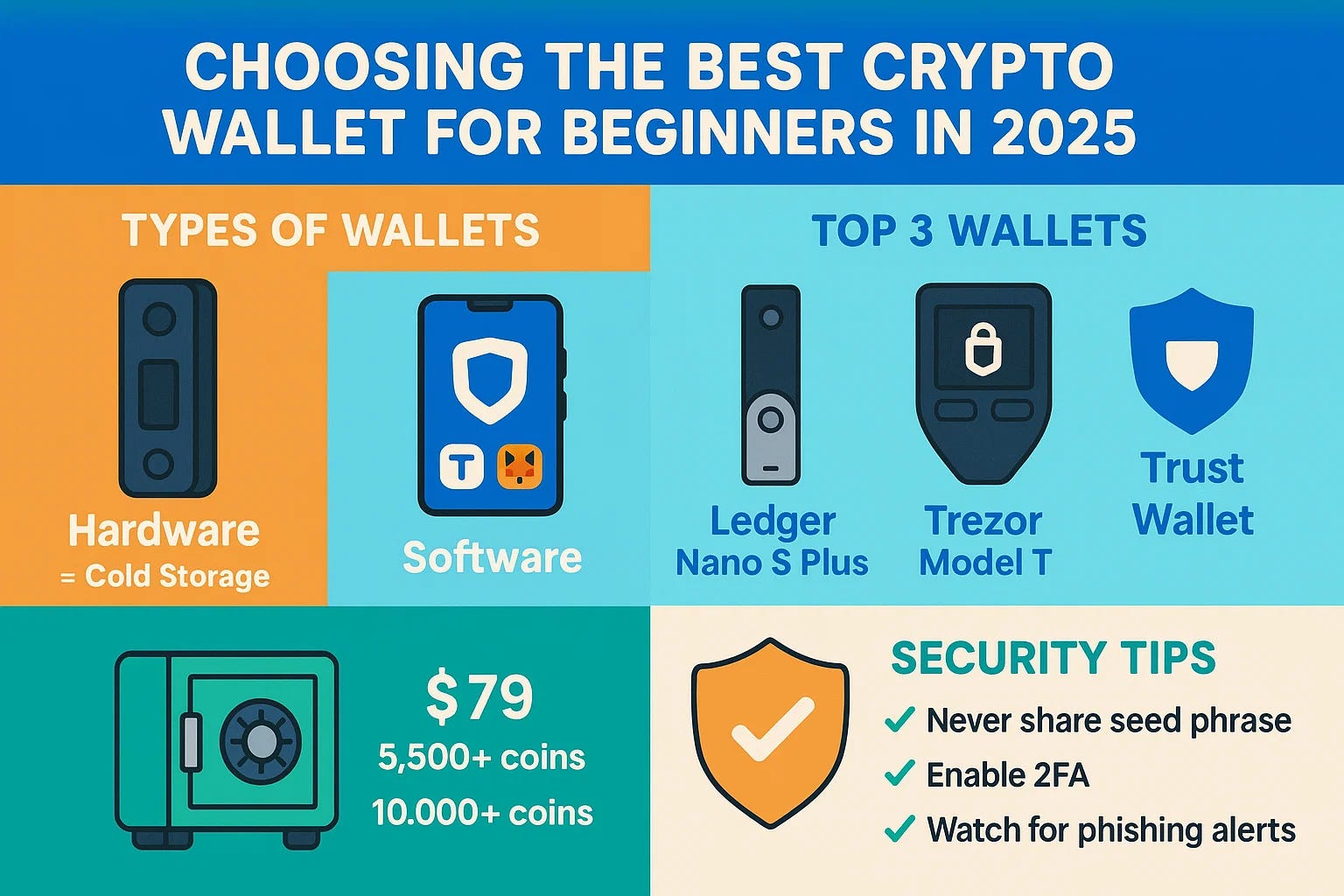
Starting your crypto journey can feel overwhelming, especially when choosing a wallet to safeguard your digital assets. With so many options—hardware, software, hot, cold—how do you pick the right one? The best crypto wallets for beginners balance security, ease of use, and compatibility with your preferred cryptocurrencies.
In this guide, we’ll break down the top 10 wallets for 2025, tested for reliability and user-friendliness. You’ll learn key features, pros and cons, and actionable tips to avoid common pitfalls. Let’s dive in!
What to Look for in a Beginner Crypto Wallet
Before exploring specific wallets, understand these non-negotiable features for beginners:
Security:
Hardware wallets (cold storage) are safest, but software wallets (hot storage) offer convenience.
Look for PIN protection, two-factor authentication (2FA), and encrypted backups.
Ease of Use:
Intuitive interfaces, clear setup guides, and 24/7 customer support matter.
Multi-Currency Support:
Ensure the wallet supports Bitcoin, Ethereum, and other coins you plan to hold.
Recovery Options:
Seed phrases or Shamir Backup ensure you can restore access if you lose your device.
Top 10 Crypto Wallets for Beginners in 2025
1. Ledger Nano S Plus – Best Budget Hardware Wallet
Price: $79
Key Features:
Stores 5,500+ cryptocurrencies.
Integrates with Ledger Live for easy management.
Independently audited security.
Pros:
✅ Affordable without compromising security.
✅ Sleek design with USB-C connectivity.
Cons:
❌ No Bluetooth.
Ideal For: Beginners prioritizing long-term security on a budget.
2. Trezor Model T – Best Touchscreen Hardware Wallet
Price: $129
Key Features:
Touchscreen for easy transaction verification.
Supports 9,000+ coins and NFTs.
Shamir Backup for advanced recovery.
Pros:
✅ User-friendly for first-time buyers.
✅ Works with MetaMask and Trezor Suite.
Cons:
❌ Pricier than entry-level models.
3. Trust Wallet – Best Software Wallet for Beginners
Price: Free
Key Features:
Supports 1M+ assets across 100+ blockchains.
Built-in DApp browser and staking features.
Pros:
✅ No-cost, intuitive mobile app.
✅ Great for Ethereum and BNB Chain users.
Cons:
❌ Less secure than hardware wallets.
4. Coinbase Wallet – Best for Exchange Users
Price: Free
Key Features:
Non-custodial wallet linked to Coinbase.
Supports NFTs and token swaps.
Pros:
✅ Seamless transfers from Coinbase.
✅ Multi-chain support (Bitcoin, Solana, etc.).
Cons:
❌ Requires self-management of keys.
5. MetaMask – Best Ethereum & DeFi Wallet
Price: Free
Key Features:
Browser extension and mobile app.
Connects to Ethereum DApps and DeFi platforms.
Pros:
✅ Perfect for NFT trading and swaps.
✅ Integrates with hardware wallets.
Cons:
❌ Limited to EVM-compatible blockchains.
Hardware vs. Software Wallets: Which Is Safer?
Hardware Wallets (Cold Storage):
Pros: Offline storage, hack-resistant.
Cons: Higher upfront cost.
Software Wallets (Hot Storage):
Pros: Free, instant access.
Cons: Vulnerable to malware.
Tip: Use a hybrid approach—store bulk assets in a hardware wallet and small amounts in a software wallet for daily use.
5 Critical Security Tips for Crypto Beginners
Never Share Your Seed Phrase: Store it offline, like in a fireproof safe.
Enable 2FA: Add an extra layer to logins.
Verify Transactions: Double-check addresses before sending.
Update Software: Keep wallets and devices patched.
Beware of Phishing: Only download wallets from official sites.
Conclusion
Choosing the best crypto wallet for beginners doesn’t have to be daunting. Whether you opt for the ultra-secure Ledger Nano S Plus, the user-friendly Trust Wallet, or the DeFi-ready MetaMask, prioritize security and simplicity. Always back up your keys, stay informed about scams, and start with small amounts to build confidence.
Ready to secure your crypto journey? Explore step-by-step guides and expert reviews at CryptoCrafted.org to master cryptocurrency security today!